




























-
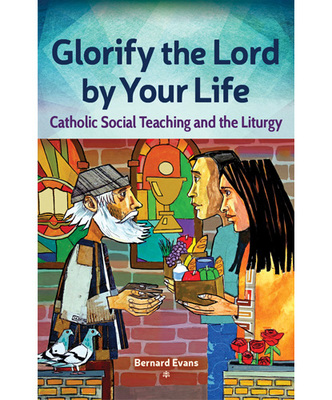
Glorify the Lord by Your Life: Catholic Social Teaching and the Liturgy
Bernard F. Evans
This resource provides a unique approach for understanding the important connection between the liturgy and the seven primary themes of Catholic social teaching. -- Publisher's website
-
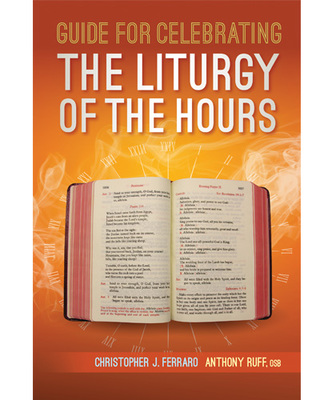
Guide for Celebrating the Liturgy of the Hours
Anthony Ruff OSB
Throughout the history of the Church, Christians have consecrated time by pausing at various moments throughout the day to pray the Liturgy of the Hours, also known as the Divine Office. Day after day, hour after hour, Christians unite their hearts with Christ and his Church as they pray the Divine Office. This book will assist parish communities and groups of Christians who wish to gather to pray the Liturgy of the Hours.
-
God’s Word, Your World, 2017-2018: Reflections to Share with Catholic Youth
Jeffrey J. Kaster
Those who work with Catholic teens know that they are a unique group with profound capabilities and tremendous challenges. It is hard to know how to approach teens, and as a result, many parishes wind up retaining a small group of core youth ministry members while the rest of the parish teens seem to disappear. How can parishes talk to teenagers, especially those who don’t seem to be listening? God’s Word, Your World! provides you with the ability to “speak teen,” communicating with all teens in your parish on their level. This CD-ROM contains one-page, Lectionary-based digital reproducible handouts for every Sunday and Holyday of Obligation from the first Sunday in September 2017 through the last Sunday in August, 2018. Each digital reproducible contains a Scripture reflection, a suggestion for action, and journaling questions. They can be printed out for handouts, e-mailed, blogged, put on a parish website, or shared on Facebook. This gives you a way to meet teens where they are and communicate about the things that they are facing in their daily lives.
-
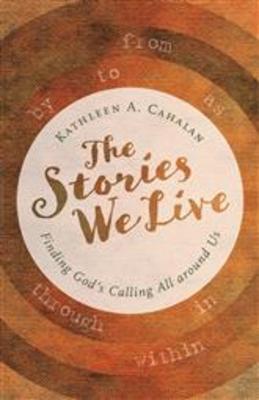
The Stories We Live: Finding God's Calling All Around Us
Kathleen A. Cahalan
"Christian vocation," says Kathleen Cahalan, "is about connecting our stories with God's story." In The Stories We Live Cahalan rejuvenates and transforms vocation from a static concept to a living, dynamic reality.
Incorporating biblical texts, her own experience, and the personal stories of others, Cahalan discusses how each of us is called by God, to follow, as we are, from grief, for service, in suffering, through others, within God. Readers of this book will discover an exciting new vocabulary of vocation and find a fresh vision for God's calling in their lives.
-
Integrating Work in Theological Education
Kathleen A. Cahalan, Edward Foley, and Gordon S. Mikoski
If only we could do a better job of helping students at "connecting the dots," theological educators commonly lament. Integration, often proposed as a solution to the woes of professional education for ministry, would help students integrate knowledge, skills, spirituality, and integrity. When these remain disconnected, incompetence ensues, and the cost runs high for churches, denominations, and ministers themselves. However, we fail in thinking that integrating work is for students alone. It is a multifaceted, constructive process of learning that is contextual, reflective, and dialogical. It aims toward important ends--competent leaders who can guide Christian communities today. It entails rhythms, not stages, and dynamic movement, including disintegration. Integrating work is learning in motion, across domains, and among and between persons. It is social and communal, born of a life of learning together for faculty, staff, administrators and students. It is work that bridges the long-standing gaps between school, ministry practice, and life. It's a verb, not a noun. Here a diverse group of theological educators, through descriptive case studies, theological reflection, and theory building, offer a distinctive contribution to understanding integrating work and how best to achieve it across three domains: in community, curriculums, and courses.
-
Calling All Years Good: Christian Vocation Throughout Life's Seasons
Kathleen A. Cahalan and Bonnie J. Miller-Mclemore
A uniquely comprehensive discussion of vocation from infancy to old age
Do infants have a vocation? Do Alzheimer's patients? In popular culture, vocation is often reduced to adult work or church ministry. Rarely do we consider childhood or old age as crucial times for commencing or culminating a life of faith in response to God's calling. This book addresses that gap by showing how vocation emerges and evolves over the course of an entire lifetime. The authors cover six of life's distinct seasons, weaving together personal narrative, developmental theory, case studies, and spiritual practices. Calling All Years Good grounds the discussion of vocation in concrete realities and builds a cohesive framework for understanding calling throughout all of life.
-
Empirical Foundations of the Common Good: What Theology Can Learn from Social Science
Daniel K. Finn
The idea of the common good was borrowed by the Fathers of the early Catholic Church from the rich philosophical traditions of ancient Greece and Rome. It has been a fundamental part of Catholic thinking about social, political, and economic life throughout the Catholic intellectual tradition, from Augustine and Aquinas to modern Catholic social thought in the encyclicals of popes in recent centuries. Yet this history has been rooted in the traditions of philosophy and theology. With the rise of the social sciences in the nineteenth century as distinct disciplines no longer limited to the methods of their philosophical origins, humanity has learned a great deal more about the human condition. Empirical Foundations of the Common Good asks two questions: what have the social sciences learned about the common good? how might theology alter its understanding of the common good in light of that insight?
In this volume, six social scientists, with backgrounds in economics, political science, sociology, and policy analysis, speak about what their disciplines have to contribute to discussions within Catholic social thought about the common good. Two theologians then respond by examining the insights of social science and exploring how Catholic social thought can integrate social scientific insights into its understanding of the common good. This volume's interplay of social scientific and religious views is a unique contribution to contemporary discussion of what constitutes "the common good."
-
United in Christ: Preparing the Liturgy of the Word at Catholic Weddings
Leisa Anslinger, Jennifer Kerr Breedlove, Charles A. Bobertz, Mary A. Ehle, Christopher J. Ferraro, Mary G. Fox, Corinna Laughlin, and Biagio Mazza
United in Christ: Preparing the Liturgy of the Word at Catholic Weddings is perfect for parish staffs to provide couples with a high quality and pastoral resource for preparing all aspects of the Liturgy of the Word for their wedding. This includes:
- Full texts of the readings from The Order of Celebrating Matrimony in sense line format
- Pastoral Scripture commentary written by married Catholic scholars and liturgical ministers
- Reading suggestions for a cohesive and unified Liturgy of the Word
- Reasons a couple might select a particular reading
- Guidance for writing the Prayer of the Faithful with sample texts
- Full texts of the consent, blessing and exchange of rings, and the Nuptial Blessing
- Selection form to turn in to the pastor, deacon, or liturgist
United in Christ presents a focused and simple resource to help couples select the most necessary parts of the wedding liturgy. The commentaries explain the meaning of the Scripture text through the lens of the needs of the couple.
-
The Gospel of Mark: A Liturgical Reading
Charles A. Bobertz
Long before the Gospel writers put pen to papyrus, the earliest Christians participated in powerful rituals that fundamentally shaped their understanding of God, Christ, and the world in which they lived. This volume offers a liturgical reading of the Gospel of Mark, arguing that the Gospel is a narrative interpretation of early Christian ritual. The Gospel begins with Jesus's baptism by John and ends with Jesus and his disciples gathered for the Lord's Supper. In between, the narrative story of Jesus unfolds as the beloved Son is sent to gather not just the Jews but Gentiles and women to the table of the one loaf. This fresh, responsible, and creative proposal shows how cultural anthropology and ritual studies elucidate ancient texts, revealing how the rituals of baptism and the Lord's Supper shaped the earliest Christians and impacted their understanding of Jesus. In addition to scholars, professors, and students, its ecclesial and pastoral ramifications will be of interest to pastors and church leaders.
-
Calling in Today's World
Kathleen A. Cahalan
Comparative religious insights into the meaning of vocation in today's world
The concept of "vocation" or "calling" is a distinctively Christian concern, grounded in the long-held belief that we find our meaning, purpose, and fulfillment in God. But what about religions other than Christianity? What does it mean for someone from another faith tradition to understand calling or vocation?
In this book contributors with expertise in Catholic and Protestant Christianity, Judaism, Islam, Hinduism, Buddhism, Confucianism and Daoism, and secular humanism explore the idea of calling from these eight faith perspectives. The contributors search their respective traditions' sacred texts, key figures, practices, and concepts for wisdom on the meaning of vocation. Greater understanding of diverse faith traditions, say Kathleen Cahalan and Douglas Schuurman, will hopefully increase and improve efforts to build a better, more humane world.
-
Christian Practical Wisdom: What It Is, Why It Matters
Kathleen A. Cahalan, Dorothy Bass, and Bon Miller
In this richly collaborative work, five distinguished scholars examine the oft-neglected embodied practical wisdom that is essential for true theological understanding and faithful Christian living. After first showing what Christian practical wisdom is and does in several real-life situations, the authors tell why such practical wisdom matters and how it operates, exploring reasons behind its decline in both the academy and the church and setting forth constructive cases for its renewal.
-
Vatican I & Vatican II: Councils in the Living Tradition
Kristin Colberg
Vatican I and Vatican II represent two of the three ecumenical councils in modern times, yet relatively few studies have sought to understand their relation to one another. In fact, the councils are often positioned as mutually exclusive so that one must choose either Vatican I's or Vatican II's presentations of church and ecclesial authority. Failing to understand the relationship between these councils inhibits the church's self-understanding and risks misinterpreting key aspects of its own tradition; further, it limits the church's ability to teach effectively on topics of concern to modern women and men, such as authority, freedom, and ecclesiology. Vatican I and Vatican II: Councils in the Living Tradition uses the questions of what, why, and how the councils taught to frame and demonstrate significant points of continuity, complementarity, and difference between them. It argues that only by seeing both Vatican I and Vatican II as communicating vital dimensions of the Christian faith can the church's living tradition be fully appreciated and speak meaningfully to modern Christian women and men.
-
Youth Ministry
Jeffrey J. Kaster
All church ministries are oriented toward fostering missionary discipleship. Youth ministry focuses this mission on young people. In this new book in the Collegeville Ministry series, Jeffrey Kaster explores leadership for youth ministry, Christian discipleship, conversion, the theological foundations for youth ministry, the importance of community and belonging, and vocational discernment. Kaster looks at the practice of vocational discernment and how it encourages youth ministry to continually help young people discern their gifts, connect them in service to meet the world's deep needs, and foster Christian discipleship. Youth ministry at its best mobilizes the faith community to support young people as they learn to live as disciples of Jesus Christ.
-
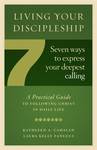
Living Your Discipleship: Seven Ways to Express Your Deepest Calling
Kathleen A. Cahalan and Laura Kelly Fanucci
We hear a lot about discipleship, but what does it mean for us, really? This enlightening book can help you discover how God has called you to be a disciple, just as surely as Jesus called to fishermen on the Sea of Galilee. Through personal stories, Scripture readings, and prayer experiences, you’ll see how the roles and relationships in your own life bless you with not simply one, but many callings to heed God’s personal invitation. Through it all, you’ll find seven practical ways you can understand and live out your own call to discipleship as Follower, Witness, Forgiver, Worshiper, Neighbor, Prophet and Steward. As the authors tell us, we all have “call stories”—times when we’ve embraced or rejected God’s voice in our hearts. But sacred Scripture tells many stories of callings just like our own. And like us, the people in the Bible sometimes get it wrong. Yet God waits for each of us with love and tender patience. Whether you read this wonderful book on your own or with others in a group—RCIA, prayer circle, ministry team, faith sharing—it will help you grow in understanding and faithfulness as you discern and discover your unique place in God’s loving kingdom.
-
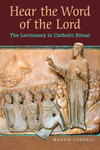
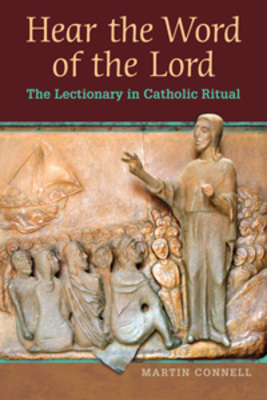
Hear the Word of the Lord: The Lectionary in Catholic Ritual
Martin Connell
Steeped in the history and composition of the New Testament, Connell demonstrates the way in which a listening assembly serves as an essential component of both our experience and our understanding of Scripture. In offering a practical overview of the Lectionary, he guides readers to a greater appreciation for liturgical proclamation, which requires both a proclaimer and a listener to hear the word of the Lord
-
Water Shaping Stone: Faith, Relationships, and Conscience Formation
Kathryn L. Cox
The Catholic Tradition requires the faithful to form and follow their conscience. This is the case even with the recognition that consciences can be malformed and one can make errs in practical judgments. Water Shaping Stone examines various aspects of this tradition regarding conscience by using, among other sources, twentieth-century magisterial documents, theologians' works, and Scripture.
Kathryn Lilla Cox argues that while the Magisterium retains teaching authority, and a responsibility to help form consciences through its teaching, focusing only on the Magisterium leads to incomplete formation. A more holistic vision of conscience formation means considering the formation of the moral agent to be a multifaceted process that draws on, for example, teaching, prayer, rituals, Scripture, practices, and virtues, along with relationships with the Triune God and communities of accountability. This vision of conscience formation retains the magisterial teaching authority while acknowledging discipleship as the theological basis for making and assessing practical judgments of conscience.
-

Opening the Field of Practical Theology: An Introduction
Kathleen A. Cahalan and Gordon S. Mikoski
Opening the Field of Practical Theology introduces students to practical theology through an examination of fifteen different approaches—ranging from feminist to liberationist, Roman Catholic to evangelical, Asian American to Latino/a.
After an introduction to the field of practical theology and its broad range of practice today, the book features chapters written by leading experts in the discipline. Each chapter has an identical structure to facilitate comparison, covering historical context, key features and figures, norms and sources of authority, theory-practice, contexts, interdisciplinary considerations, areas of current and future research, and suggested readings.
Opening the Field of Practical Theology is an ideal introduction to the field, highlighting the diverse ways practical theology is engaged today.
-
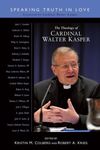
The Theology of Cardinal Walter Kasper: Speaking the Truth in Love
Kristin M. Colberg and Robert A. Krieg
Cardinal Walter Kasper's contributions to theology, ecumenism, Jewish-Christian relations, and the pastoral life of the church have shaped Catholicism in the twentieth and twenty-first centuries. Acknowledging this, Pope Francis has praised Kasper's “profound and serene” theology. In The Theology of Cardinal Walter Kasper: Speaking Truth in Love, leading theologians from across the United States and Canada explore the full scope of Kasper’s thought on topics such as the character of ecumenical and interreligious dialogue, Christology, theological method, and the nature of the church-world relationship. Kasper himself presents four previously unpublished texts: on the interpretation of Vatican II, on forgiveness, on Christian hope, and on the approach to theology today. This volume originated at a conference, at which Kasper was an active participant, in honor of his eightieth birthday. It provides an introduction to Kasper's thought and also an overview of major issues in contemporary Catholic theology.
-
Stewardship: Living a Biblical Call
Bernard F. Evans
In Stewardship: Living a Biblical Call, Bernard Evans presents an accessible and easily understood biblical and theological foundation for giving that both parishioners and stewardship leaders will find practical and valuable. In focused chapters, the many aspects of stewardship are named and described, assisting readers in recognizing gifts and actions that make practicing stewardship far more than a financial proposition. Grounded in years of practical work in this area with parish leaders, Evans adeptly ties the Catholic invitation to stewardship to biblical foundations as well as the social teaching of the church. A clear, concise, readable work, Stewardship: Living a Biblical Call also engages key questions of the age, such as ecological stewardship and care for body, mind, and spirit. Evans explores the communal and personal actions that help every believer proclaim the reign of God.
-
Distant Markets, Distant Harms: Economic Complicity and Christian Ethics
Daniel K. Finn
Does a consumer who bought a shirt made in another nation bear any moral responsibility when the women who sewed that shirt die in a factory fire or in the collapse of the building? Many have asserted, without explanation, that because markets cause harms to distant others, consumers bear moral responsibility for those harms. But traditional moral analysis of individual decisions is unable to sustain this argument.
Distant Harms, Distant Markets presents a careful analysis of moral complicity in markets, employing resources from sociology, Christian history, feminism, legal theory, and Catholic moral theology today.
Because of its individualistic methods, mainstream economics as a discipline is not equipped to understand the causality entailed in the long chains of social relationships that make up the market. Critical realist sociology, however, has addressed the character and functioning of social structures, an analysis that can helpfully be applied to the market. The True Wealth of Nations research project of the Institute for Advanced Catholic Studies brought together an international group of sociologists, economists, moral theologians, and others to describe these causal relationships and articulate how Catholic social thought can use these insights to more fully address issues of economic ethics in the twenty-first century. The result was this interdisciplinary volume of essays, which explores the causal and moral responsibilities that consumers bear for the harms that markets cause to distant others.
-
Monks and Muslims II: Creating Communities of Friendship
Mohammad A. Shomali and William Skudlarek OSB
If Christians and Muslims are to live in peace, encouraging one another to grow in holiness and working together for the good of all God's creation, they must move beyond politicized and often negative images of one another. Monastic/Muslim dialogue issuing from friendship and focused on revelation, prayer, and witness is an important component in this effort. Indeed, it is essential.
A conference jointly sponsored by the International Institute for Islamic Studies and Monastic Interreligious Dialogue brought together Iranian Shi‘a Muslims and Christian monastics to Qum, Iran. Their first gathering was held a year previous in Rome, Italy and focused on spiritual topics like meditation and prayer. The second meeting in Qum was an occasion to deepen the bonds of friendship that had already been established. The conference theme centered on friendship and the dialogue explored the scriptural, theological, spiritual, philosophical, and practical bases for friendship between monks and Muslims. This follow up book invites readers to listen in and learn from their conversation and witness.
-
In the Name of the Church: Vocation and Authorization of Lay Ecclesial Ministry
William John Cahoy
In the Name of the Church: Vocation and Authorization in Lay Ecclesial Ministry presents insights generated in the 2011 Collegeville National Symposium on Lay Ecclesial Ministry, a gathering designed to prioritize the theological foundations for vocation and authorization in lay ecclesial ministry, and make recommendations to advance excellence in this expanding ministry. The essays presented by seven theologians at the Symposium are included, along with thoughtful input drawn from the experiences of lay and ordained ministers who gathered to “amplify the voice and strengthen the national will to promote effective ecclesial leadership practices identified within Co-Workers in the Vineyard of the Lord.”
-
The Moral Dynamics of Economic Life: An Extension and Critique of Caritas in Veritate
Daniel K. Finn
Caritas in veritate (Charity in Truth) is the ''social'' encyclical of Pope Benedict XVI, one of many papal encyclicals over the last 120 years that address economic life. This volume, based on discussions at a symposium co-sponsored by the Institute for Advanced Catholic Studies and the Pontifical Council for Justice and Peace, analyzes the situation of the Church and the theological basis for Benedict's thinking about the person, community, and the globalized economy.
The Moral Dynamics of Economic Life engages Benedict's analysis of ''relation,'' the characteristics of contemporary social and economic relationships and the implications of a relational, Trinitarian God for daily human life. Crucial here is the Pope's notion of ''reciprocity,'' an economic relationship characterized by help freely given, but which forms an expectation that the recipient will ''reciprocate,'' either to the donor or, often, to someone else. This ''logic of gift,'' Benedict argues, should influence daily economic life, especially within what he calls ''hybrid'' firms, which make a profit and invest a share of that profit in service to needs outside the firm. Similarly, development - whether of an individual or of a nation - must be integral, neither simply economic nor personal nor psychological nor spiritual, but a comprehensive development that engages all dimensions of a flourishing human life.
The essays, written by social scientists, theologians, policy analysts and others, engage, extend, and critique Benedict's views on these issues, as well as his call for deeper dialogue and a morally based transformation of social and economic structures. -
Angels and Demons: A Christian Primer of the Spiritual World
Michael Patella OSB
The supernatural world is prominent in many of today's movies, television shows, novels, and the popular imagination. But some of what is presented as grounded in a Christian worldview is in fact far from that. In Angels and Demons, Michael Patella, OSB, offers an accessible and fascinating look at supernatural realities as they really are presented in the Bible and Christian tradition. Among the topics Patella explores with a valuable combination of pastoral wisdom and academic rigor are: the role of angels in the ministry of Jesus; the apocalyptic battle in Revelation; the occult, possession, and the work of Satan; what angels are and what they're not; the Last Judgment: how? when?
Readers will appreciate Patella's level-headed appraisal of the views of the supernatural world in the various sections of the Bible. They will be engaged by his lucid account of "Who's Who in Hell." They will be both comforted and inspired by his foundational conviction that Christ has claimed creation for the forces of good, evil is on the run, and there is no chance of the tide ever turning the other way, evil actions and human suffering notwithstanding.
-
Canticum Novum: Gregorian Chant for Today's Choirs
Anthony Ruff OSB
The book contains 100 hymns and antiphons with psalm verses for every season and occasion. Word-by-word English translations of the Latin responses are provided to aid the singers’ understanding. The psalm verses are in Latin and English on facing pages with easy-to-follow pointing to match the psalm tones. The English psalm verses are from the Revised Grail Psalms. A demonstration recording of chants from Canticum novum is also available.
Primarily Latin antiphons with psalm verses; with nine strophic hymns. Chants shown in four-line notation, five-line notation, and lineless neumes of the St. Gall school.