-

A Future With Hope: Praying With Youth, Preparing for Confirmation: Complete Leader's Guide
Matthew Reichert and Zack Stachowski
Strengthen your confirmation preparation program by helping your young people enter into the liturgical prayer of the Church. Following a strong liturgical model and using liturgical texts, but framed around their experiences preparing for the sacrament, these powerful prayer services will help them grow in their relationship with God and one another.
This Leader’s Guide includes eight complete prayer scripts, each with an introductory prayer overview, full text of prayers, psalms, and Scripture, suggested points for reflection, and recommendations for music. Also included are special preparation guides to help the young people in your parish community serve as presider, lector, or music minister. -
Contemporary Issues in Business Ethics (Sixth Edition)
Joseph R. DesJardins and John J. McCall
Contemporary Issues in Business Ethics begins from the perspective that business ethics are the products of market mechanisms and social values. By placing this approach in an international context, this edition shows students how ethical theories are applied in today’s complex global marketplace. The book also addresses the unique ethical dilemmas faced by employees and employers. Key topics covered include: ethical relativism, psychological egoism, ethics and the law, virtue ethics, and ethical decision-making.
-
An Introduction to Business Ethics (Fifth Edition)
Joseph R. DesJardins
Since its inception, An Introduction to Business Ethics by Joseph DesJardins has been a cutting-edge resource for the business ethics course. DesJardins’ unique multidisciplinary approach offers critical analysis and integrates the perspective of philosophy with management, law, economics, and public policy, providing a clear, concise, yet reasonably comprehensive introductory survey of the ethical choices available to us in business.
-
Philosophy Through Teaching
Emily Esch
This volume is a celebration of philosophy teaching published on the occasion of the twentieth biennial Workshop-Conference of the American Association of Philosophy Teachers. It contains five articles from the journal Teaching Philosophy that each received the AAPT's Lenssen Prize, multiple commentaries on each article, and authors’ reflections. It is dedicated to the founders, leaders, members, and future of the association.
-
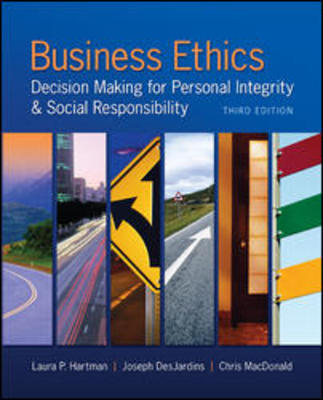
Business Ethics: Decision Making for Personal Integrity and Social Responsibility
Laura Pincus Hartman, Joseph R. DesJardins, and Chris MacDonald
Business Ethics: Decision-Making for Personal Integrity & Social Responsibility, 3e is designed to prepare the student to apply an ethical decision-making model, not only in the ethics course but throughout her or his business discipline. This model teaches students ethical skills, vocabulary, and tools to apply in everyday business decisions and throughout their business courses. The authors speak in a sophisticated yet accessible manner while teaching the fundamentals of business ethics. Hartman’s professional background in law and her teaching experience in the business curriculum, combined with DesJardins’ background in philosophy and MacDonald’s ability to distill complicated business transactions into understandable terms, results in a broad language, ideal for this approach and market. The authors’ goal is to engage the student by focusing on cases and business scenarios that students already find interesting. Students are then asked to look at the issues from an ethical perspective. Additionally, its focus on AACSB requirements makes it a comprehensive business ethics text for business school courses.
The goal for the third edition is to provide “a comprehensive yet accessible introduction to the ethical issues arising in business.” Hartman and DesJardins have retained the focus on decision-making as well as the emphasis on both personal and policy-level perspectives on ethics. This edition continues to provide pedagogical support throughout the text. The most noticeable changes involve a thorough updating of distinct items such as Reality Checks, Decision Points, and readings to reflect new cases, examples and data. -
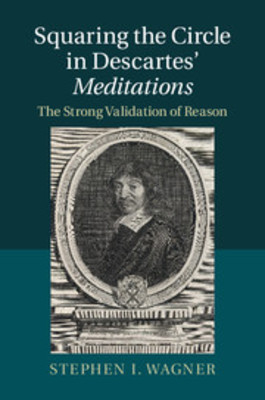
Squaring the Circle in Descartes' Meditations: The Strong Validation of Reason
Stephen I. Wagner
Descartes' Meditations is one of the most thoroughly analyzed of all philosophical texts. Nevertheless, central issues in Descartes' thought remain unresolved, particularly the problem of the Cartesian Circle. Most attempts to deal with that problem have weakened the force of Descartes' own doubts or weakened the goals he was seeking. In this book, Stephen I. Wagner gives Descartes' doubts their strongest force and shows how he overcomes those doubts, establishing with metaphysical certainty the existence of a non-deceiving God and the truth of his clear and distinct perceptions. Wagner's innovative and thorough reading of the text clarifies a wide range of other issues that have been left unclear by previous commentaries, including the nature of the cogito discovery and the relationship between Descartes' proofs of God's existence. His book will be of great interest to scholars and upper-level students of Descartes, early modern philosophy and theology.
-
Modern Honor: A Philosophical Defense
Anthony Cunningham
This book examines the notion of honor with an eye to dissecting its intellectual demise and with the aim of making a case for honor’s rehabilitation. Western intellectuals acknowledge honor’s influence, but they lament its authority. For Western democratic societies to embrace honor, it must be compatible with social ideals like liberty, equality, and fraternity. Cunningham details a conception of honor that can do justice to these ideals. This vision revolves around three elements—character (being), relationships (relating), and activities and accomplishment (doing). Taken together, these elements articulate a shared aspiration for excellence. We can turn the tables on traditional ills of honor—serious problems of gender, race, and class—by forging a vision of honor that rejects lives predicated on power and oppression.
-

Skyesong
Anthony Cunningham
[Fiction] Spanning more than one hundred years, Skyesong tells the story of the MacEacherns, fabled horsemen and sword makers in the Scottish Hebrides. Love, suffering, banishment, war, betrayal, revenge, forgiveness, healing—these are all vibrant threads in a compelling tale that begins with Bonnie Prince Charlie’s disastrous Battle of Culloden in 1746, makes its winding way through the American Civil War and distant Van Diemen’s Land, and finally comes home to the Isle of Skye. Skyesong features an unforgettable cast of characters—Calum and Coinneach MacEachern, the young twins who gain a fearsome reputation as the vengeful Horsemen of Culloden; Elspeth Shyrie, the mysterious woman who rescues the twins and forges a new life for them on Skye; Alasdair, the wayfaring adventurer who lives such a large and gallant life, only to meet such an inglorious end; Hector, the young scholar fresh from Edinburgh who leaves his beloved home for the sake of Sorcha MacLeod, daughter of Skye’s most powerful people, the MacLeods of Dunvegan; Cullodena MacPhee, the fiercely independent girl who carries on a correspondence with Hector for over twenty years, giving him the precious gift of Skye in her sketches and field notes; forlorn Rory, who saves a foolish boy from an unjust punishment on the other side of the world, only to pay his own heavy price for so doing; Titus Bingham, the disconsolate war hero spared from self-destruction by an odd child; Hannibal, the military savant who serves the real-life Joshua Chamberlain, the hero of Gettysburg, who relies so deeply on this extraordinary fellow to conduct war against a much bolder, wiser foe. From Skye’s Cuillin Mountains to the killing fields of Fredericksburg and Petersburg, Skyesong brings to life the profound ravages of chance, the limits of human endurance, and the healing graces of affection. 20% of the author royalties will be donated to the Wounded Warrior Project.
-
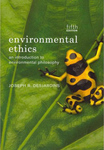
Environmental Ethics: An Introduction to Environmental Philosophy (Fifth Edition)
Joseph R. DesJardins
Environmental Ethics offers brief yet wide-ranging introduction to issues of environmental ethics and major schools of thought in the field. A discussion of basic concepts in ethical theory in Part I is followed by an application of these thoughts across a variety of major environmental problems (such as pollution, population, animals) in Part II. Part III introduces students to the major theories of environmental ethics in particular (including biocentrism, ecofeminism, and the land ethic). The final chapter offers a pragmatic approach to reconciling philosophical perspectives as a means to making progress in solving environmental problems.
-
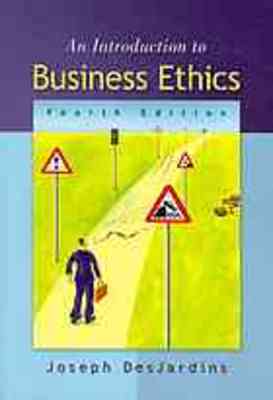
An Introduction to Business Ethics (Fourth Edition)
Joseph R. DesJardins
Suitable as a resource for the business ethics course, this title offers an approach that encompasses all that an introductory business ethics course is, from a multidisciplinary perspective. It also offers critical analysis and integrates the perspective of philosophy with management, law, economics, and public policy.
-
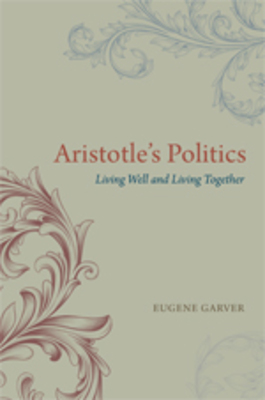
Aristotle's Politics: Living Well and Living Together
Eugene Garver
“Man is a political animal,” Aristotle asserts near the beginning of the Politics. In this novel reading of one of the foundational texts of political philosophy, Eugene Garver traces the surprising implications of Aristotle’s claim and explores the treatise’s relevance to ongoing political concerns. Often dismissed as overly grounded in Aristotle’s specific moment in time, in fact the Politics challenges contemporary understandings of human action and allows us to better see ourselves today. Close examination of Aristotle’s treatise, Garver finds, reveals a significant, practical role for philosophy to play in politics. Philosophers present arguments about issues—such as the right and the good, justice and modes of governance, the relation between the good person and the good citizen, and the character of a good life—that politicians must then make appealing to their fellow citizens. Completing Garver’s trilogy on Aristotle’s unique vision, Aristotle’s Politics yields new ways of thinking about ethics and politics, ancient and modern.
-
Business, Ethics, and the Environment: Imagining a Sustainable Future
Joseph R. DesJardins
This book provides a framework for business ethics in the age of sustainability. The book examines the many ways that business is changing, and should change, to meet the demands of a sustainable future. This book blends philosophical and ethical analysis with real-world practical cases and examples to show what sustainable business can and should become. This book covers the shift to sustainable business models, environmental sustainability, alternative economic model of sustainable economics, sustainable production, and consumerism.
-
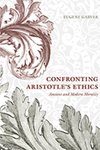
Confronting Aristotle's Ethics: Ancient and Modern Morality
Eugene Garver
What is the good life? Posing this question today would likely elicit very different answers. Some might say that the good life means doing good - improving one's community and the lives of others. Others might respond that it means doing well - cultivating one's own abilities in a meaningful way. But for Aristotle these two distinct ideas - doing good and doing well - were one and the same and could be realized in a single life. In Confronting Aristotle's Ethics, Eugene Garver examines how we can draw this conclusion from Aristotle's works, while also studying how this conception of the good life relates to contemporary ideas ofmorality.
The key to Aristotle's views on ethics, argues Garver, lies in the Metaphysics or, more specifically, in his thoughts on activities, actions, and capacities. For Aristotle, Garver shows, it is only possible to be truly active when acting for the common good, and it is only possible to be truly happy when active to the extent of one's own powers. But does this mean we should aspire to Aristotle's impossibly demanding vision of the good life? In a word, no. Garver stresses the enormous gap between life in Aristotle's time and ours. As a result, this book will be a welcome rumination on not only Aristotle, but the relationship between the individual and society in everyday life. -
Feminist Interventions in Ethics and Politics: Feminist Ethics and Social Theory
Barbara S. Andrew, Jean Keller, and Lisa H. Schwartzman
This collection breaks new ground in four key areas of feminist social thought: the sex/gender debates; challenges to liberalism/equality; feminist ethics; and feminist perspectives on global ethics and politics in the 21st century. Altogether, the essays provide an innovative look at feminist philosophy while making substantive contributions to current debates in gender theory, ethics, and political thought.
-
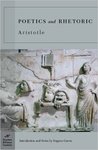
Poetics and Rhetoric
Aristotle and Eugene Garver
It is no exaggeration to say that all Western literary criticism flows from Aristotle. In the Poetics he focuses mainly on drama, especially tragedy, and introduces ideas that are still being debated more than two thousand years later. Among them is the often misunderstood theory of the unities of action, place, and time, as well as such concepts as: art as a form of imitation, and drama as an imitation of human actions; plot as a drama’s central element, and "reversal” and "recognition” as important elements within a plot; and the purging of pity and fear from the audience as the function of tragedy. Rather than offer these ideas merely as abstract theories, Aristotle applies them in cogent analyses of the classic Greek dramas—the tragedies of Aeschylus, Sophocles, and Euripides.
In the Rhetoric, Aristotle turns to the principles of persuasive writing, including argumentation and the logical development of proof, appeals to emotion, and matters of delivery and style. Perhaps most essentially, Aristotle teaches us how to engage in the central civic activities of accusing and defending, recommending policies, and proving and refuting ideas.
These two foundational works are key documents for understanding the culture and politics of Western civilization, and how they continue to evolve today. -
For the Sake of Argument: Practical Reasoning, Character, and the Ethics of Belief
Eugene Garver
What role does reason play in our lives? What role should it play? And are claims to rationality liberating or oppressive? For the Sake of Argument addresses questions such as these to consider the relationship between thought and character. Eugene Garver brings Aristotle's Rhetoric to bear on practical reasoning to show how the value of such thinking emerges when members of communities deliberate together, persuade each other, and are persuaded by each other. That is to say, when they argue.
Garver roots deliberation and persuasion in political friendship instead of a neutral, impersonal framework of justice. Through incisive readings of examples in modern legal and political history, from Brown v. Board of Education to the South African Truth and Reconciliation Commission, he demonstrates how acts of deliberation and persuasion foster friendship among individuals, leading to common action amid diversity. In an Aristotelian sense, there is a place for pathos and ethos in rational thought. Passion and character have as pivotal a role in practical reasoning as logic and language. -
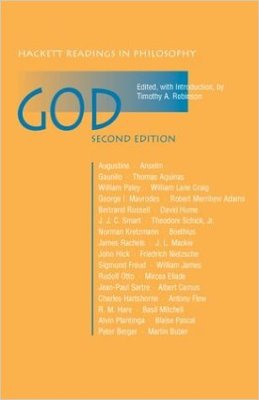
God (Second Edition)
Timothy A. Robinson
This significantly expanded anthology provides a rich selection of traditional and modern works that reflect the many ways in which philosophers have attempted to address the question of the existence of God.
-
The Heart of What Matters: The Role for Literature in Moral Philosophy
Anthony Cunningham
This work aims to show that literature has a powerful role to play in understanding life's ethical problems. It offers a critique of Kantian ethics, which has enjoyed a preeminent place in moral philosophy in the United States, arguing that it does not do justice to the reality of our lives.
-
Contemporary Issues in Business Ethics
Joseph R. DesJardins and John J. McCall
The text provides students with a sociopolitical framework for looking at business ethics. This text takes students from a common, skeptical starting point – Why study business ethics? – to the very heart of ethical and political theory.
-
Pluralism in Theory and Practice: Richard McKeon and American Philosophy
Eugene Garver and Richard Buchanan
Unknown to many, unintelligible to some, Richard McKeon (1900-1985) is considered by those familiar with his work to be among the most important of all twentieth-century philosophers. In a career that spanned seven decades, McKeon published eleven books and more than 150 articles, inspired and intimidated generations of students (among them Richard Rorty, Wayne Booth, and Paul Goodman), and received most of the honors available to an American philosopher. As a teacher and administrator at the University of Chicago, he was instrumental in founding its general education program and initiating the first interdisciplinary program in the humanities. His achievements outside the university included a major part in developing the first cultural and philosophical projects of UNESCO. Fearsome in the classroom, he is renowned for his scholarly brilliance; the problems he thought important, however, did not occupy his colleagues' attention. Ironically, they are now the very issues that present-day philosophers grapple with, namely pluralism, the relationship of philosophy to the history of philosophy, rhetoric and philosophy, the diversity of culture, and the problems of communication and community. Pluralism in Theory and Practice not only brings McKeon to the attention of contemporary philosophers and students; it also puts his theories into practice. Some of the essays explicate aspects of McKeon's thought or situate him in the context of American intellectual and practical engagement. Others take the concerns he raised as starting points for inquiries into urgent contemporary problems, or, in some cases, for reexamining McKeon's work as fertile ground for shaping the direction of new investigation.
-
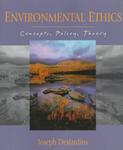
Environmental Ethics: Concepts, Policy, and Theory
Joseph R. DesJardins
This exciting anthology emphasizes ethical issues in environmental policy while providing balanced coverage of theoretical perspectives and applied environmental topics.
-
Aristotle in Outline
Timothy A. Robinson
Contents:
Introduction.
I. Wisdom and Science. The Four Causes. The Vocabulary of Science. The Form of Scientific Explanation. What Wisdom Knows: The Soul; The Gods.
II. Aristotle’s Ethics. Appendix: The Virtues and Vices. Narrative Descriptions. Schematic Summary.
III. Politics. The State and the Polis. What the State Is For. The Forms of Government. The Best Form of Government.
Bibliographic Essay.
Index. -

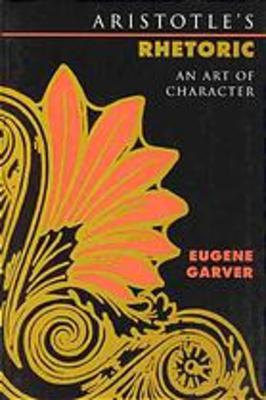
Aristotle's Rhetoric: An Art of Character
Eugene Garver
In this major contribution to philosophy and rhetoric, Eugene Garver shows how Aristotle integrates logic and virtue in his great treatise, the Rhetoric. He raises and answers a central question: can there be a civic art of rhetoric, an art that forms the character of citizens? By demonstrating the importance of the Rhetoric for understanding current philosophical problems of practical reason, virtue, and character, Garver has written the first work to treat the Rhetoric as philosophy and to connect its themes with parallel problems in Aristotle's Ethics and Politics. Garver's study will help put rhetoric at the center of investigations of practice and practical reason.
Printing is not supported at the primary Gallery Thumbnail page. Please first navigate to a specific Image before printing.